I’ve read/listened to approximately 40 books this year so far. Keep in mind, fully half of those have been manga, comic books, and novellas, so it’s not as impressive of a feat as you might think. Anyways, the reading pace I have at the beginning of the year never stays, so don’t anticipate me announcing that I’ve read over 100 books by the end of the year. That is very unlikely to happen.
As I mentioned in an earlier post, I am now in the office four days a week, which means I will have less time to read. Also, I would like to focus more on my writing, and that means the reading has to taper off somewhat. A lot of the books I want to get to in the next few months are all long doorstoppers, so that will mean fewer books overall. But the number of books isn’t the point of reading. The point is to read good books, and have fun doing it.
I originally wanted to write this blog post back at the end of March so I could have a quarterly reading review, but time flew by and I missed my chance. Instead, I’ll be giving you a “quadrimester” reading review, which I think is the correct way to say that I’ll be doing this once every four months instead of once every 3 months.
Here are my top ten books of 2025 (so far):
10. Dark Matter by Blake Crouch (2016)
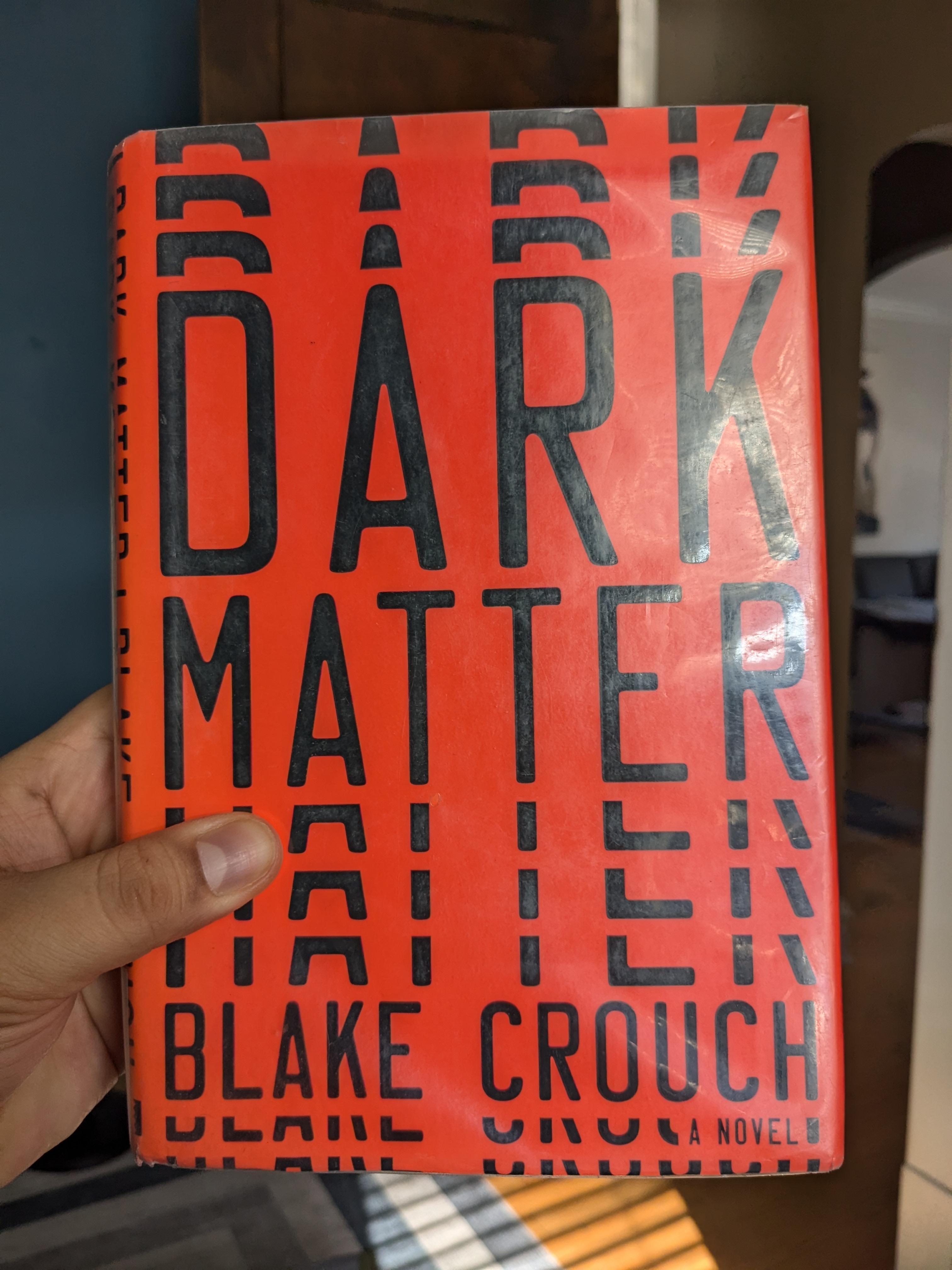
I’ve read a handful of Blake Crouch novels at this point. Upgrade was the first of his that I read. I liked it well enough, but it was entirely forgettable. The pace was so breakneck that I never really had the time to get to know any of the characters deeply. Recursion was better. I felt more in touch with the characters and I felt that the novel had better pacing overall.
And while I put Recursion above Dark Matter, the latter had enough of what I liked about Upgrade and what I liked about Recursion to secure it in my top ten. This is a novel where we follow Jason Dessen, a physicist who built a machine that can take you to parallel worlds. One day he is kidnapped and wakes up in a world that he doesn’t recognize.
This is a Thriller with a capital “T.” The pace is fast, but this novel does a better job at letting us get to know the characters. If I’m bring honest, the idea of parallel worlds/alternate history is something that fascinates me to no end. It’s a theme I never get tired of.
09. What It Means When A Man Falls From The Sky by Lesley Nneka Arimah (2017)
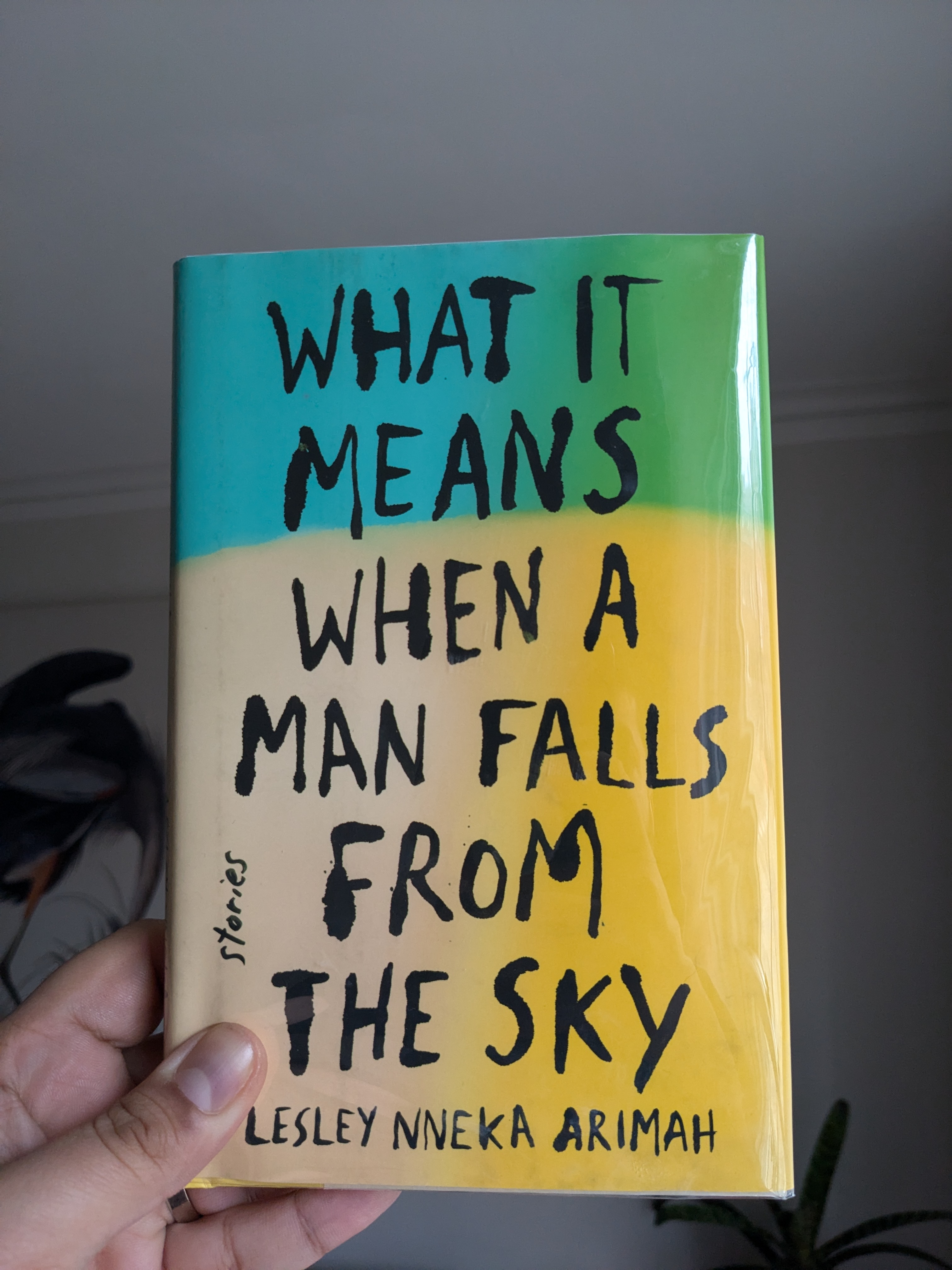
I listened to the audiobook for this short story collection years ago and loved it so much that I purchased the hardcover. I have been meaning to reread this collection for a while and decided 2025 is the year I’m going to try to revisit a few books that have been on my shelves for a long time. Think of it like catching up with an old friend.
I wasn’t sure how the stories would hold up against my memory, and I’m happy to say that not only did the stories still resonate, but I liked them even more the second time around. The stories run the gamut from literary to horror to the fantastical. Arimah is a master in spare prose that tells a lot with very few words. Her stories are short enough to read in a few minutes, and you can dip in and out of the collection as you please.
According to her website, this collection remains her only published book of fiction. I hope we get another collection or a novel from her soon.
08. The Bear and the Serpent by Adrian Tchaikovsky (2017)

This is the second volume of Tchaikovsky’s Echoes of the Fall trilogy. In the first novel, The Tiger and the Wolf, we are introduced to a world where humans are separated into tribes and kingdoms based on their ability to transform into certain animals. Typically, a person can only “step” into one animal, but Maniye, our main character, has the ability to step into a tiger and a wolf (hence the title). That novel follows her journey as well as the politicking of various characters as they attempt to secure dominance, consolidate power, and administer their own form of justice. I liked the first novel well enough, but it’s written in a style that can at times be a bit dry. What saves the novel from boredom is the richness of the world and the struggles of the characters, which are primal.
About a year after reading The Tiger and the Wolf, I decided to give the sequel a chance. The Bear and the Serpent picks up pretty soon after the previous novel. We’re thrown right into a new power struggle, but also have to contend with an outside force that is wiping out entire tribes. People must put aside their petty (and not-so-petty) rivalries and band together against this new threat.
We pretty much follow the same cast of characters as we did before, which I appreciated. This novel, to me, was way better than the first one. I was drawn more into the world than I was before. Everything that was revealed added to my enjoyment of the setting and the story. There was a real sense of raised stakes, and I liked the ending a lot.
I already have the final volume, The Hyena and the Hawk on hold at the library. I’m not waiting a year to finish this series.
07. Saturation Point by Adrian Tchaikovsky (2024)

In a rare occasion, Adrian Tchaikovsky finds himself next to himself on my top ten list. Saturation Point is a climate fiction novella that follows a pretty standard premise: A scientist, Jasmine Marks, is asked to revisit The Zone, a rainforest belt around the equator that is inhospitable to humans. When Marks went into the Zone years ago, the mission ended in disaster. A new corporate entity tasks Marks with revisiting the zone to solve a new mystery. What they all find is pretty wild, and that is why this novella is in my top ten. Not only do we get Tchaikovsky’s trademark prose, we also get his wit, and his ability to pull the rug out from under you when you think you’re on a straight and narrow path. I can’t say much more than that. Read this novella. It will take you an afternoon.
06. Inuyasha Vol 18 by Rumiko Takahashi (2013)
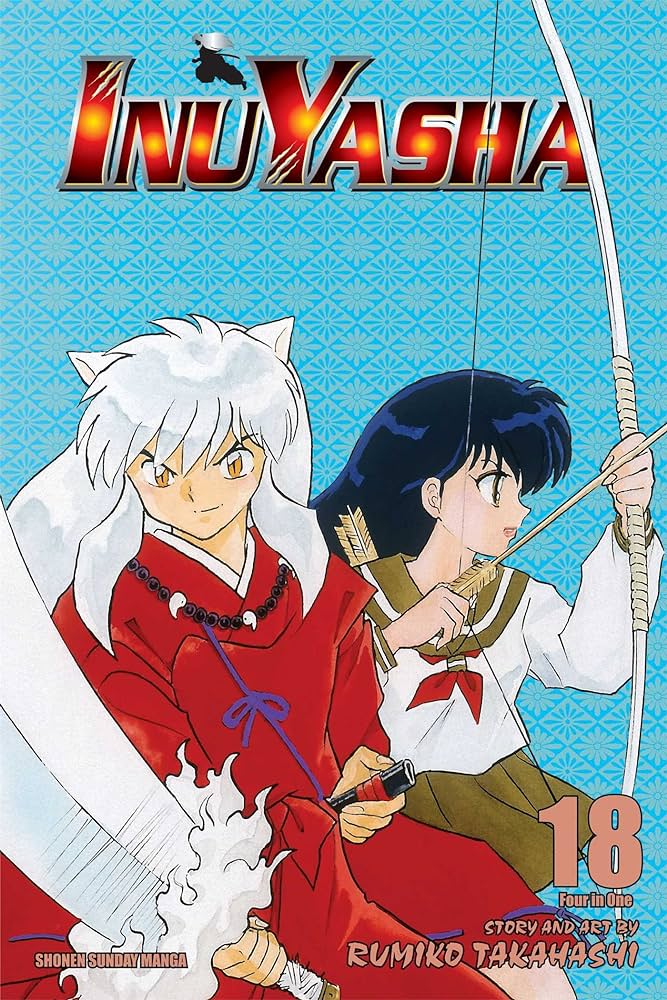
The picture is of the final volume, but this entry is really for the entire series. I started reading Inuyasha digitally back in 2024. I have vague recollections of catching the anime on Toonami late at night when I was a kid. I was dazzled by the monsters and the historical setting, which I thought was lushly rendered on screen. Reading the manga was a similar experience: I loved the setting, the art, and the various demons, ghosts, and other creatures we encounter. I read volumes 13-18 this year, so it’s hard to focus on one particular volume when it’s all essentially one big story. Who cares; it’s my top ten list.
05. Refuse to Be Done by Matt Bell (2022)
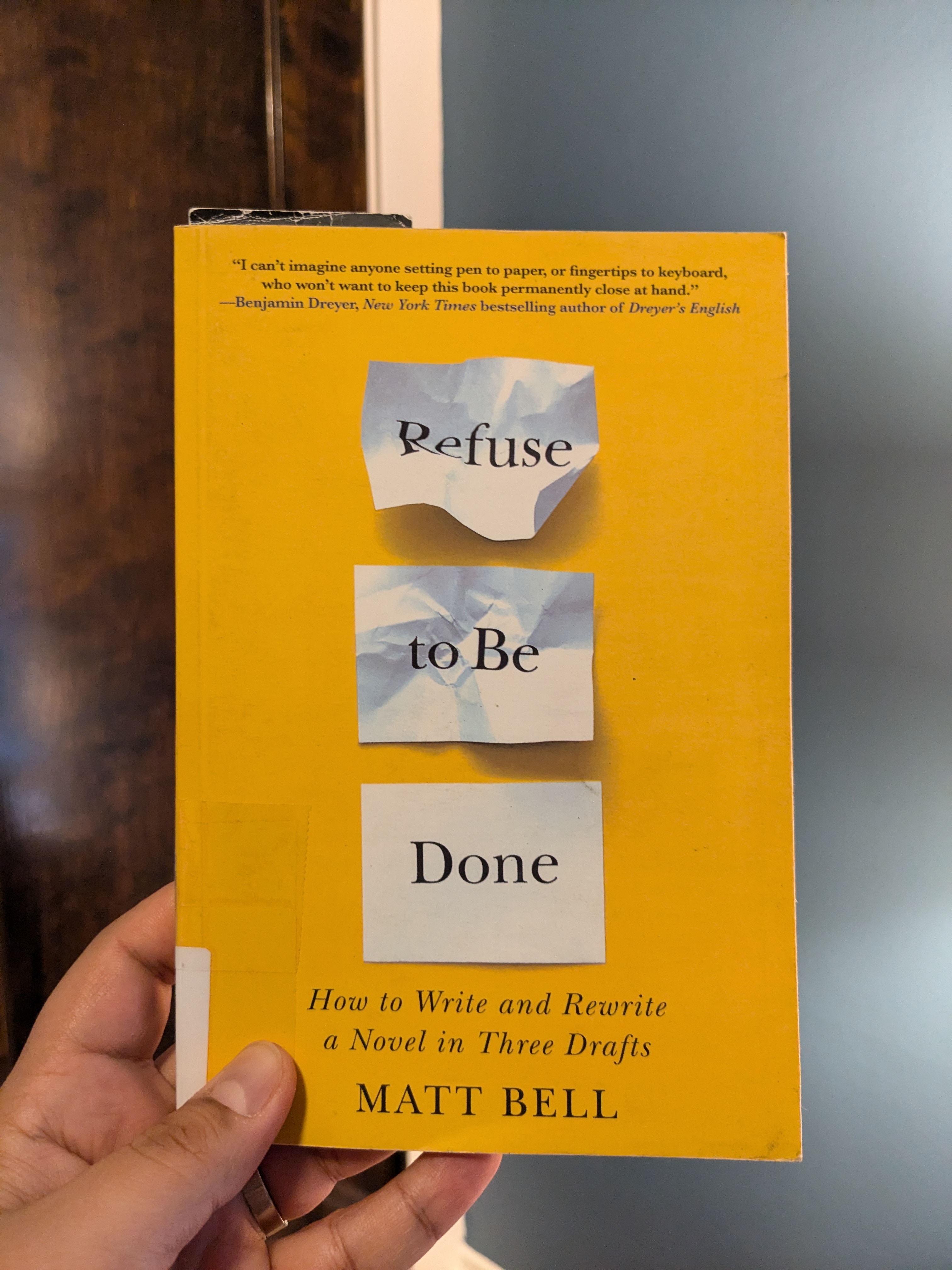
This is the only non-fiction book I’ve read so far this year, but it was a good one. This is a book that’s filled with writing advice about how to actually finish the novel that you’ve started. It breaks it down into three chapters, each chapter covering a draft of your manuscript.
I liked the approach that Matt Bell outlines in this book, and though his method is a bit tedious, it will likely get you the best results if you follow it. I took notes on this book (something I rarely do when reading) and have been referring to them constantly as I write my novel.
04. Pluto Vol 8 by Naoki Urasawa (2010)

This is another case similar to Inuyasha: This is a photo of the final volume, but I’m really talking about the entire series. This manga is a retelling/reimagining of an arc from Astro Boy by Osamu Tezuka. Urasawa got permission from the Tezuka estate to adapt this arc into the series Pluto. While I’ve never read Astro Boy, I really want to now.
In this series, we follow a robot detective, Gesicht, as he tries to solve the murders of a bunch of high profile robots and a few human scientists. There are echoes of the U.S. invasion of Iraq as well as themes on international rights, revenge, love, hatred, and artificial intelligence.
It’s a superb series, and one that won’t take too long to read.
03. The Wild Robot by Peter Brown (2016)

A robot being shipped to a factory or store finds himself washed ashore on an island when the ship he’s on encounters a storm. He turns on, surrounded by small island creatures who can talk. The animals are afraid at first, but the robot turns into a valuable member of the community.
This book was such a charming read. It had all the hallmarks of a children’s story: talking animals, friendship, community, and low stakes conflict. I can see why it’s such a popular book. There’s a sequel, I believe, and an animated movie adaptation. Since I don’t have any children, I might have to get my nephews to watch the movie with me.
02. The Will of the Many by James Islington (2023)

A deposed prince is in hiding. Without warning, he finds himself adopted by an aristocratic family who isn’t taking him in out of the goodness of their hearts. Vis, our deposed prince, finds himself embroiled in a conspiracy at the Catenan Academy, where he has to not only investigate the murder of his adoptive father’s brother, but also graduate top of his class.
This fantasy novel was a surprise hit for me. I’ve never read anything by James Islington before, so I didn’t know what to expect. This novel is written in the first person present tense which gives it a sense of immediacy. We are right there with Vis figuring out everything that’s happening as we go along. The side characters are all interesting and distinct, with their motivations and foibles all feeling real.
The magic system & worldbuilding is really interesting. The world is based on the Roman Empire, though we have a stricter class structure and some flying machines as well (think magic blimps). The magic system is based on people “ceding their Will” to people higher up than them on the social pyramid. Ceding will is essentially passing your potential on to someone “more important.” The lower classes are listless and tired, floating through life on barely any energy. The upper classes are strong, healthy, and are able to wield a large amount of magic to their advantage.
Though the system seems to be a clear metaphor for capitalism, I enjoyed its portrayal nonetheless. I felt the same way about Babel by RF Kuang and its criticism of colonialism. There are no extra points for subtlety. A good story with a strike against an unjust system is always going to win with me.
The second book in this series, The Strength of the Few, comes out later this year. I want to try and read it on release day.
01. Flowers For Algernon by Daniel Keyes (1966)
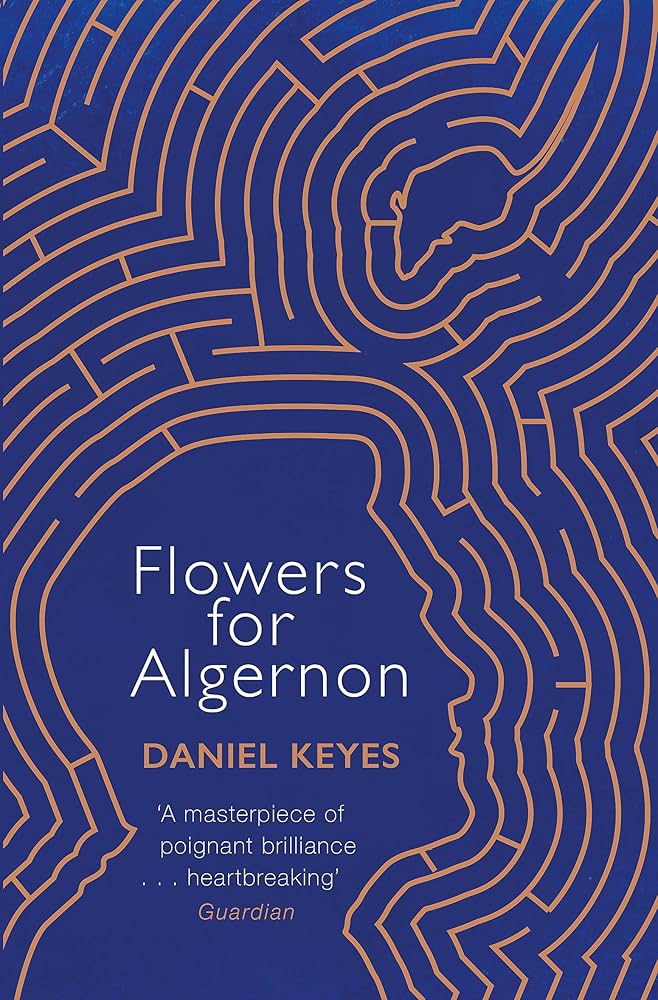
Charlie Gordon is a man with an intellectual disability who has trouble navigating the world. He is constantly ridiculed by others and treated as less than a person. When he has a chance to undergo a surgery that will make him smarter, he jumps at the opportunity.
The novel is told through a series of progress reports written by Charlie. They start out with spelling and grammatical errors and observations from the point of view of a person with intellectual disabilities. After Charlie gets the surgery, his writing and understanding of the world starts to get better. This is a great way to tell the story. You empathize with Charlie, and you experience firsthand his struggles.
This was a novel I read way back in middle school, though it was the abridged version (it’s also possible that I read the short story; this novel was originally published as a short story). I remember liking it back then, so I decided to give it a shot.
It’s a harrowing book, especially when Charlie starts to reminisce about the physical and emotional abuse he suffered at the hands of his parents, his peers, and various caregivers. Charlie is a very loving person, and wants to do the right thing. As he gains intelligence, he encounters the complexity of the world, and it’s a very hard adjustment for him.
This book is a classic for a reason. Go read it. It will make you question every way we still treat the most vulnerable people in our population.
Conclusion
While I’ve read some great books this year, it’s still early, and this top ten will likely change as the year progresses. Books at the lower end will drop off, but if I read ten books that are better than those listed above, the next top ten list I post at the end of August will be completely different. That’s actually the best case scenario; it means I have more great books to look forward to.
—
What are your top books of the year? Let me know in the comments below.
 The Night Bulletin