Reading
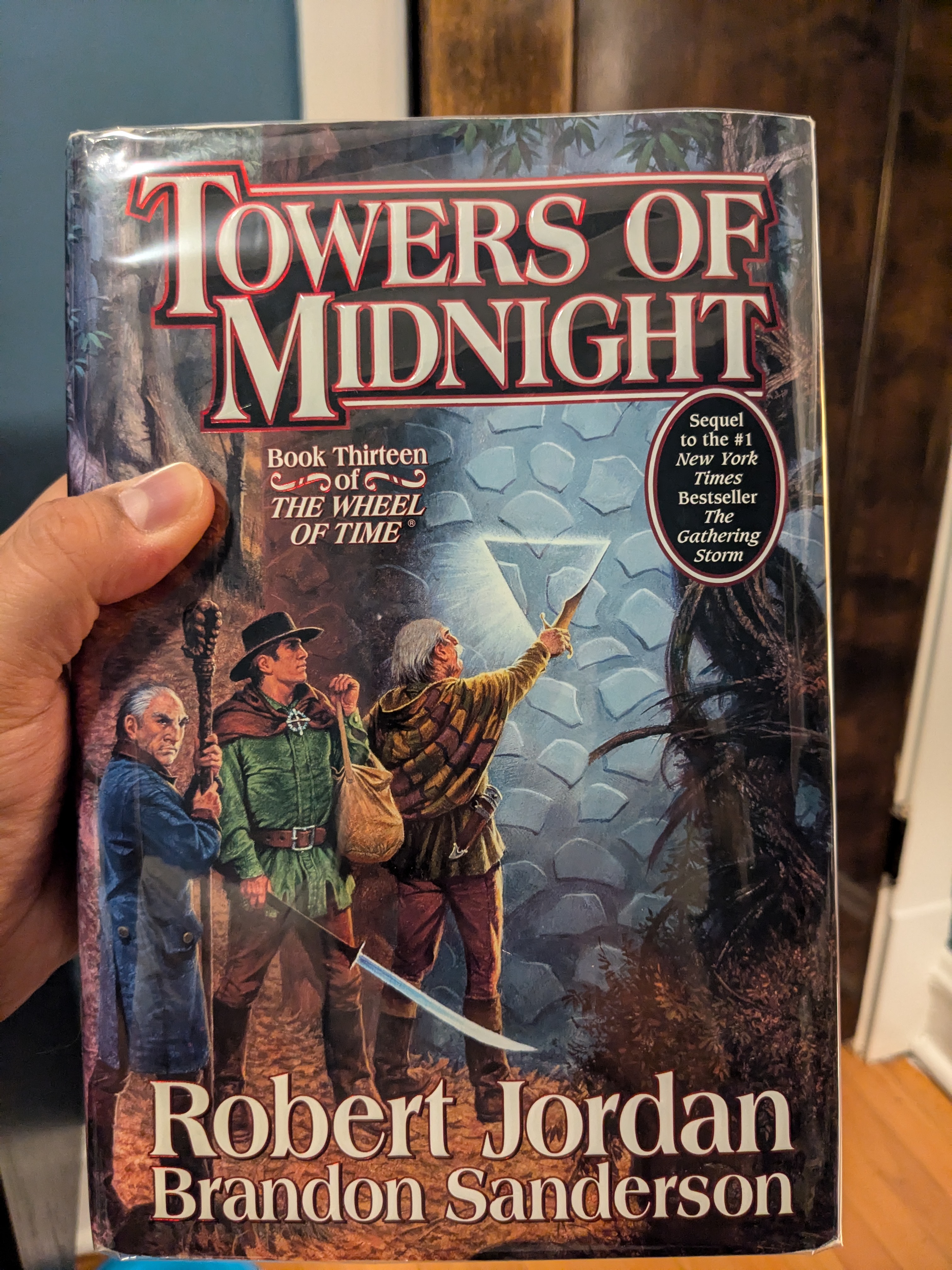
I finished Towers of Midnight by Robert Jordan. This was a long one (~850 pages in hardcover), but I loved every second of it. So many of the details that I missed the first time around hit me hard this time. There was a character reveal that I either forgot about or missed completely, and the final battle that one character has with some strange creatures in a large metal tower (if you know, you know) was a highlight for me. This was the 13th out of the 14th volume, so I only have one more book to go before my reread of this series is complete. Granted, that final book is over 900 pages long, so don’t expect me to complete that for a few weeks (or months) yet.
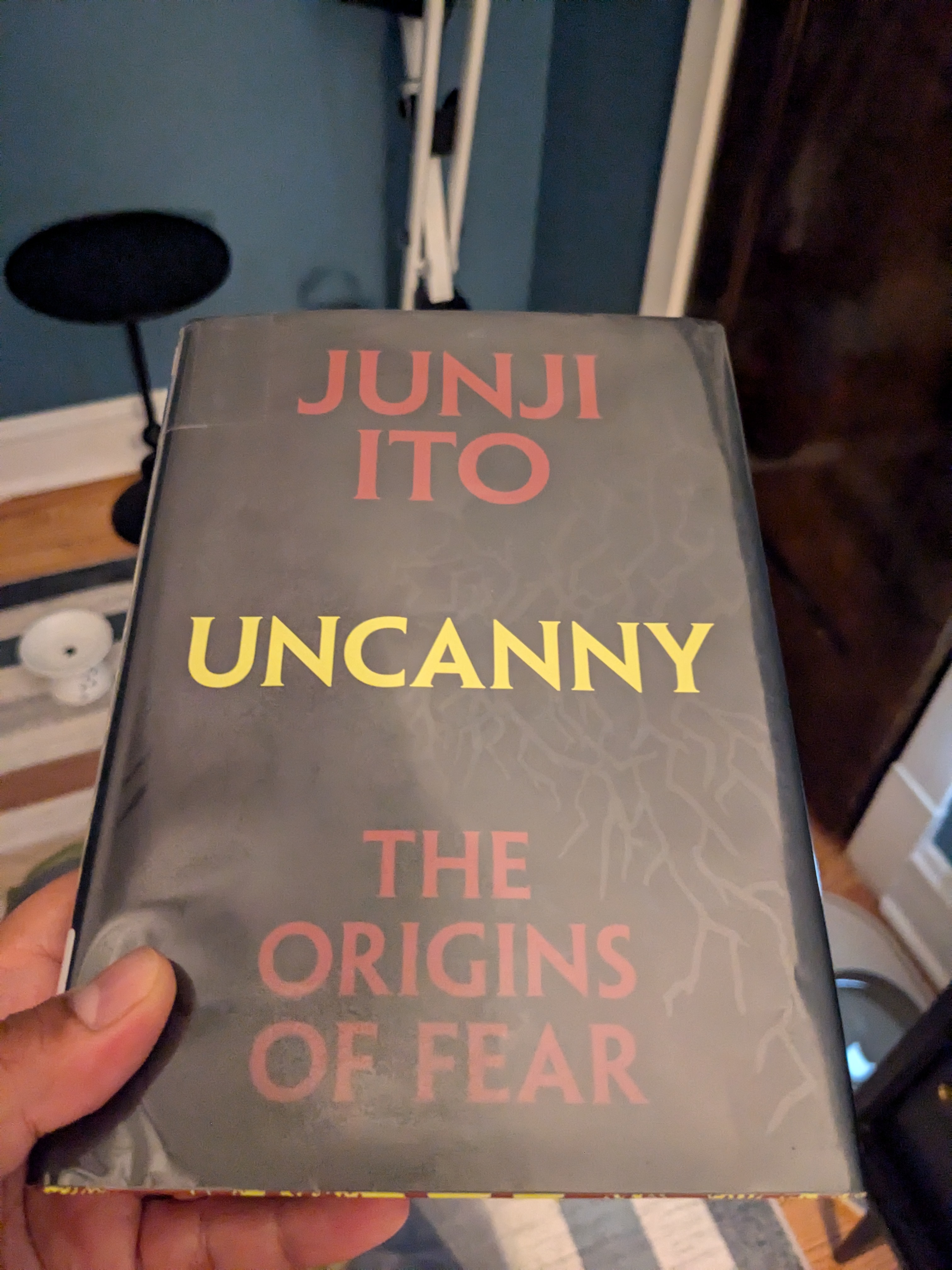
I haven’t read much non-fiction this year. The only non-fiction book I read was Matt Bell’s writing book, Refuse to Be Done. I read some synopsis of some history books that sounded interesting, but the trouble with those is that I never finish them. I always start loving them, but once I hit page 150 or 200 (usually out of 500+), I get bored and put the book down. I feel like I’m doing research for a class I’ll never take a test for. I enjoy history documentaries (The Fall of Civilizations on YouTube being my current favorite), so I don’t really have a desire to pick up another history book. Instead, I got Uncanny: The Origins of Fear by the horror manga master Junji Ito.
I have read several of Ito’s works (Gyo, Uzumaki, and Smashed), and love the artwork and creepy vibes of his stories (even if his narrative skills aren’t as polished). This book was a part memoir, part how-to guide on drawing manga. Ito goes over his childhood, his journey from dental implant sculptor to full-time mangaka, and his methodology for creating stories. He includes scans from some of his story notes, which are really interesting but also very hard to read since the scanned image and accompanying text is so small. There are some great passages on crafting story, creating characters, and visual tricks he uses to create fear in his readers. The book itself is beautiful. Every page has an illustration in the background behind the text, and there are full-page illustrations at the beginning of each chapter. It looks like the naked hardback has a design printed on it, but I couldn’t remove the dust jacket to find out (the library tapes the dust jacket to the book). I’d recommend picking this up, even if you don’t read manga.

After finishing Towers of Midnight, I wanted something short and sweet that I could finish in a couple of days. I picked up the audiobook for Rose/House by Arkady Martine from the library. This novella came out in 2023 and I’ve been interested in it since. It’s about a house that is an entire AI in and of itself (as opposed to simply being a house that is run on AI). If you’ve seen Smart House, that classic of Disney Channel cinema directed by none other than LeVar Burton, then you know what I’m talking about.
This novella was, sadly, very disappointing. First of all, it was slow. There was a short story’s worth of material here, but it was stretched out to novella length, making this a slog to get through. Every piece of dialogue was commented on. When the AI spoke, the author described the tone as “smug” or “amused” every time, and had to comment on how it was strange for an AI to sound like that. The story has a mystery at its heart. A dead body is found in the house, despite the fact that it only allows a single person to enter the house. This person was on the other side of the world when the murder presumably took place. Unfortunately, this mystery is only half-solved. So many things are left unanswered. If a work of fiction is marketed as a mystery, and that mystery isn’t solved to a level of satisfaction, I get angry. It’s a huge pet peeve of mine. We already live in a world of confounding unsolvable mysteries. Let me have some closure in my fiction, please.
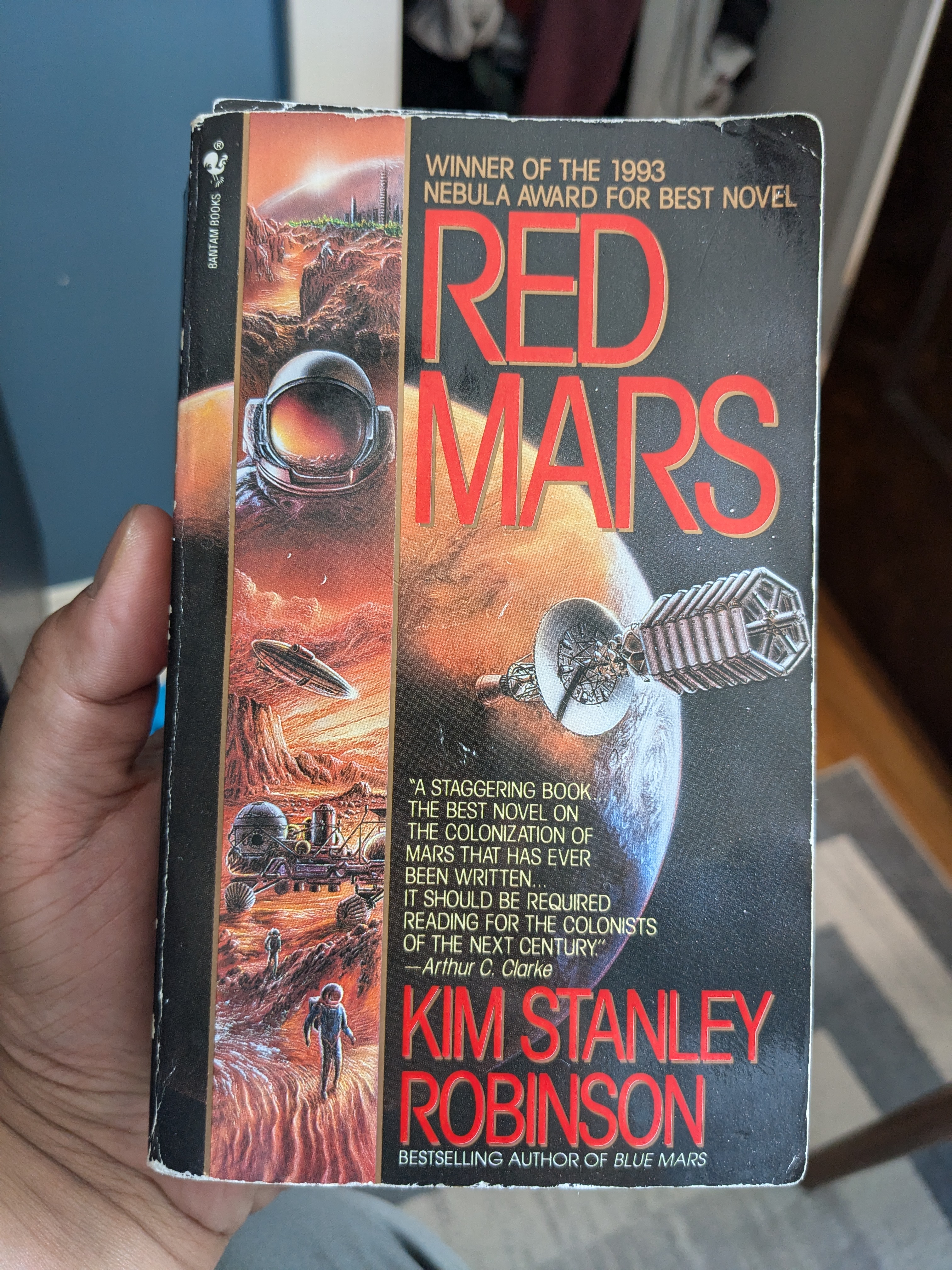
On a more positive note, I started Red Mars by Kim Stanley Robinson. This is the first in his award-winning Mars Trilogy (the following books are Green Mars and Blue Mars). I’ve heard a lot of good things about this trilogy, and many people describe it as his magnum opus. I’m glad I read some KSR in the past, because this book so far has some hallmarks of his work: characters that are sketched out rather than filled in and large info dumps that might make some readers skim or go cross-eyed. I’m excited to see where this one goes.

After Rose/House, my library serendipitously dropped the audiobook for We Solve Murders by Richard Osman into my lap. This is a mystery novel about a private security guard, Amy, who gets involved in a murder conspiracy and enlists her ex-cop father-in-law Steve to solve the case. The book is tinged with wry British humor and characters that are quirky without being exhausting. Something Osman does that few writers do well: he’s able to include modern aspects like social media, ChatGPT, and celebrity culture into his work without it being awkward or trite. This is the first in a series, but he has 4 or 5 other mystery novels in his Thursday Murder Club series that I want to read next. I will likely finish this audiobook tomorrow, so I will be requesting the Thursday Murder Club right after (though it’s such a popular book it’ll probably be months before it becomes available).
Writing
I wrote 1,213 words in “Mythos” this week, all in one speedy two-hour sprint session. This way of writing really works, especially since I’m limited in how many days I have available to write. I’m starting to see the shape the story is going to take, and I will likely step back and spend a few days writing a new outline for the novel as a way to stay focused. I have 3 POVs that I’m going to be working with, so my plan is to outline each POV separately, then look at them side by side and tweak them so they dovetail into each other nicely. This is a risky way to do things, but there is a specific reason I’m doing it this way (telling you that reason will make no sense at this stage). I’m anticipating this outline to go through 2 or 3 iterations before it finally has some coherence.
I also started re-working a short story I wrote way back in 2018 and had my critique group eviscerate last year. I printed the story out, marked it up, then wrote an “as-is” outline of the story. This showed me the entire piece at a glance, and also helped expose the flaws in the story. The order of events is more or less okay, but there is a lot of unnecessary backstory and there are some sections that are just too long-winded given that this is a short story. My next step is to write a new outline and copy-paste some passages that I want to keep.
—
What have you been reading and/or writing this week? Let me know in the comments below.
 The Night Bulletin