Check out this post on my Substack.
I’m not as fast of a reader as I used to be. Part of this is age, I think. I’m in my mid-thirties now and can’t speed through books like a rocket fueled by caffeine-laced jet fuel. Another is my schedule. Work, being a homeowner and a husband, and trying to fill my time with writing have all contributed to a slower reading pace this year specifically.
I’ve also introduced intentionality to my reading. By that I mean I am no longer trying to fill every 2-minute void in my life with reading. The goal isn’t to get through the book; it’s to understand and retain it. I’ve started taking notes on what’s happening and how it’s making me feel. This isn’t to turn every book into an assignment or for a future essay (though that possibility is always there); it’s to make sure I’m retaining what I’m reading, especially with the number of long series I’m in the middle of. I don’t want to read just so I can say I’ve read a book. I want it to sink its claws into me and not let go. If I have to read slower and take notes, thus lowering the number of books I read in a year, so be it.
Anyways, below is a list of the books I’ve read so far this year.
Where The Axe is Buried by Ray Naylor
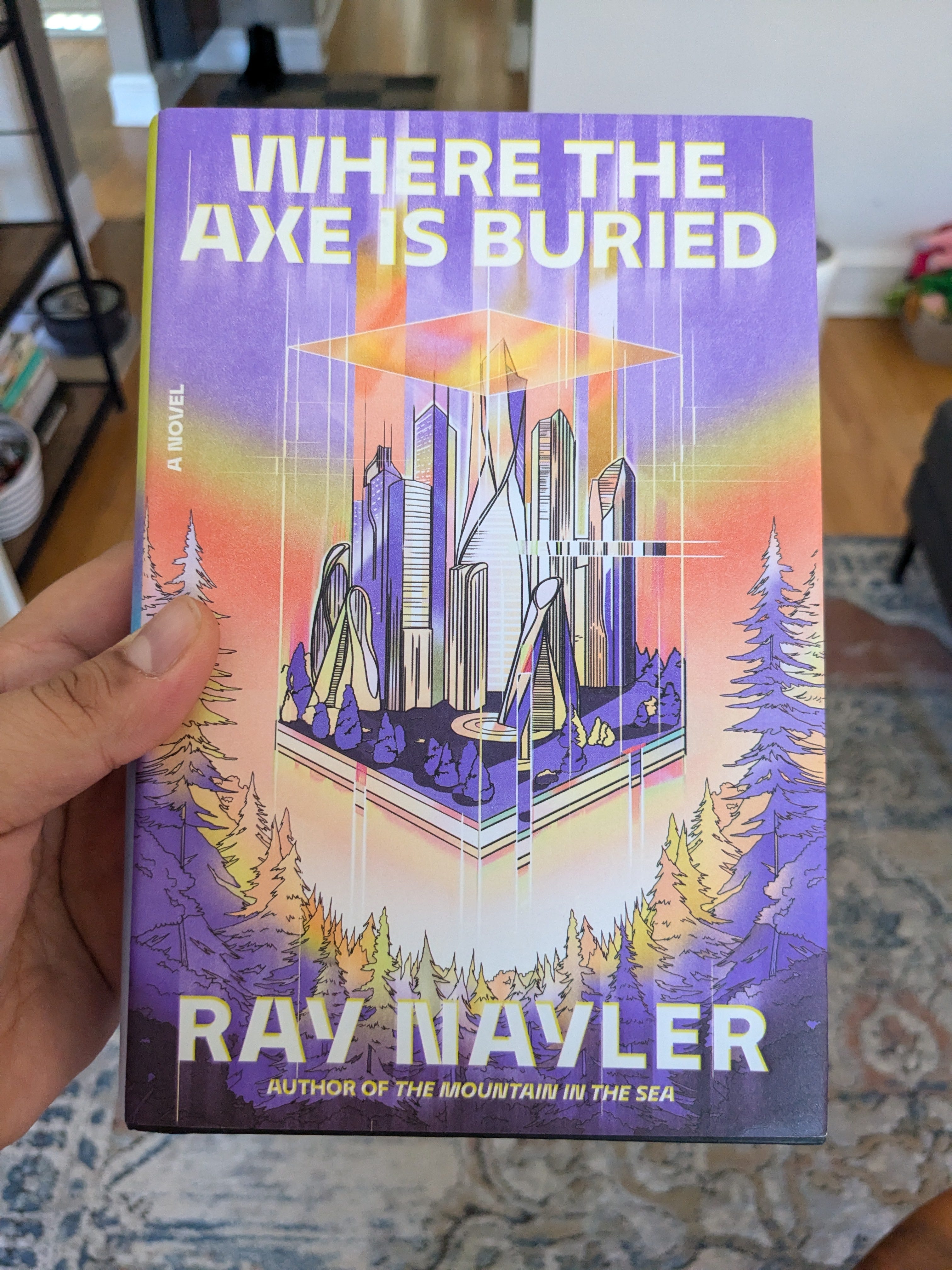
This novel was a scary one to read, especially in 2026.
In the future, an authoritarian regime named “The Federation” dominates its citizens through repressive technological surveillance and retribution. Their president, a man who maintains his grip on power by downloading his mind into successive bodies, faces a deteriorating body and a threat to his very existence. In Western Europe, a process called “Rationalization” leads to AI Prime Ministers offering a peaceful and fair alternative to human governance, though the actions of one artificial prime minister threatens the very system that provides stability for the Western world.
The above paragraph is taken from a review I wrote for the Speculative Fiction Writers’ Association blog, which I think you should definitely check out.
This book was bleak, chilling, and honest about what kind of future we could have if we supplant all we are to artificial intelligence without safe guardrails. I highly recommend it.
From A Certain Point of View – A New Hope
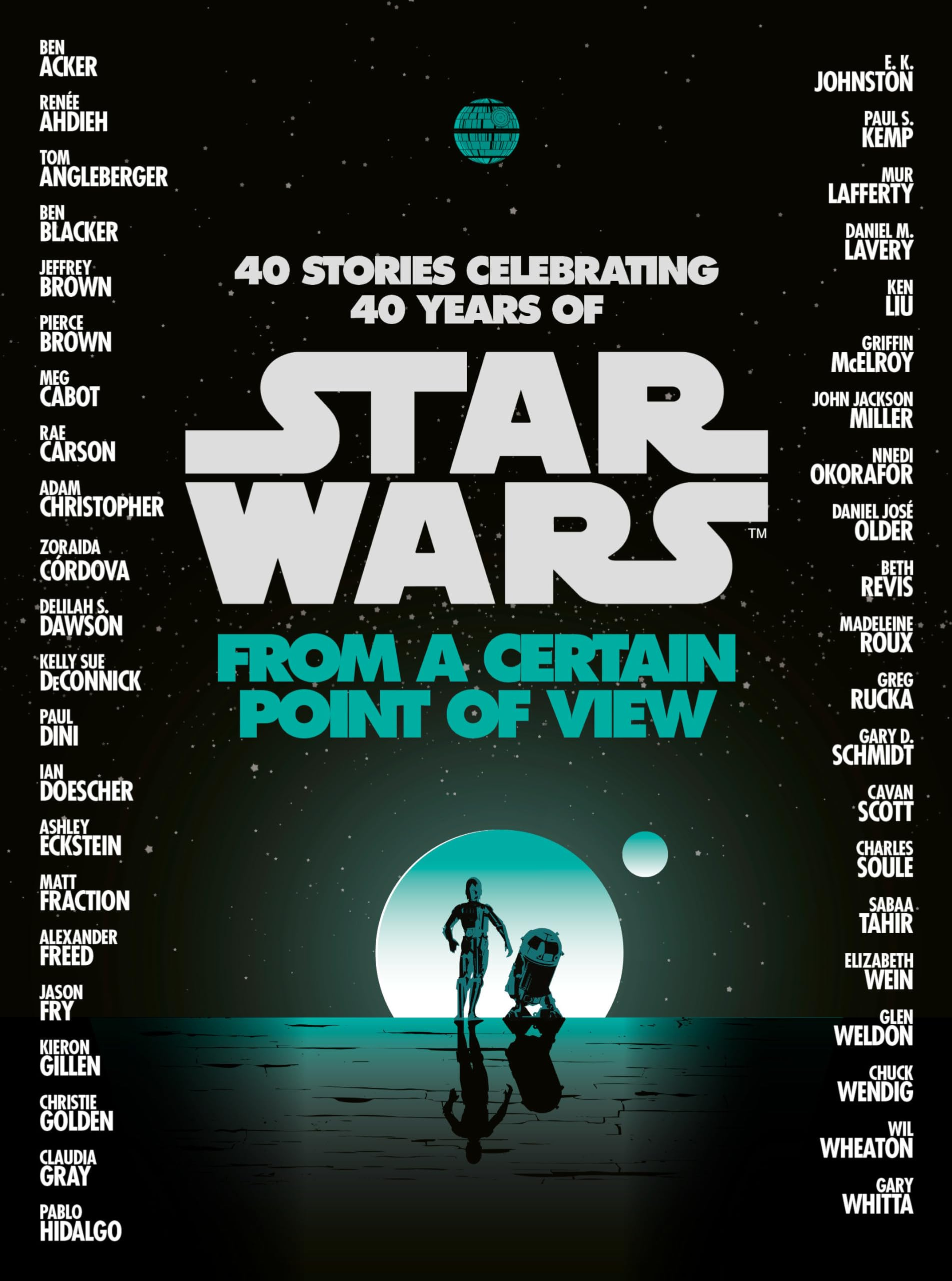
This anthology of short stories is creative and wonderful. It tells the entire story of the first Star Wars movie from the perspectives of people on the periphery of the action. A lot of the stories are brief, and a lot of them are tinged with a wry humor that winks and nods to the movies in a fun way. If you aren’t feeling up to re-watching the movie for the 500th time, this book is a great way to take bite-sized chunks out of the Star Wars universe. Bonus points if you listen to the audiobook. There are sound effects galore.
The Lathe of Heaven by Ursula K Le Guin
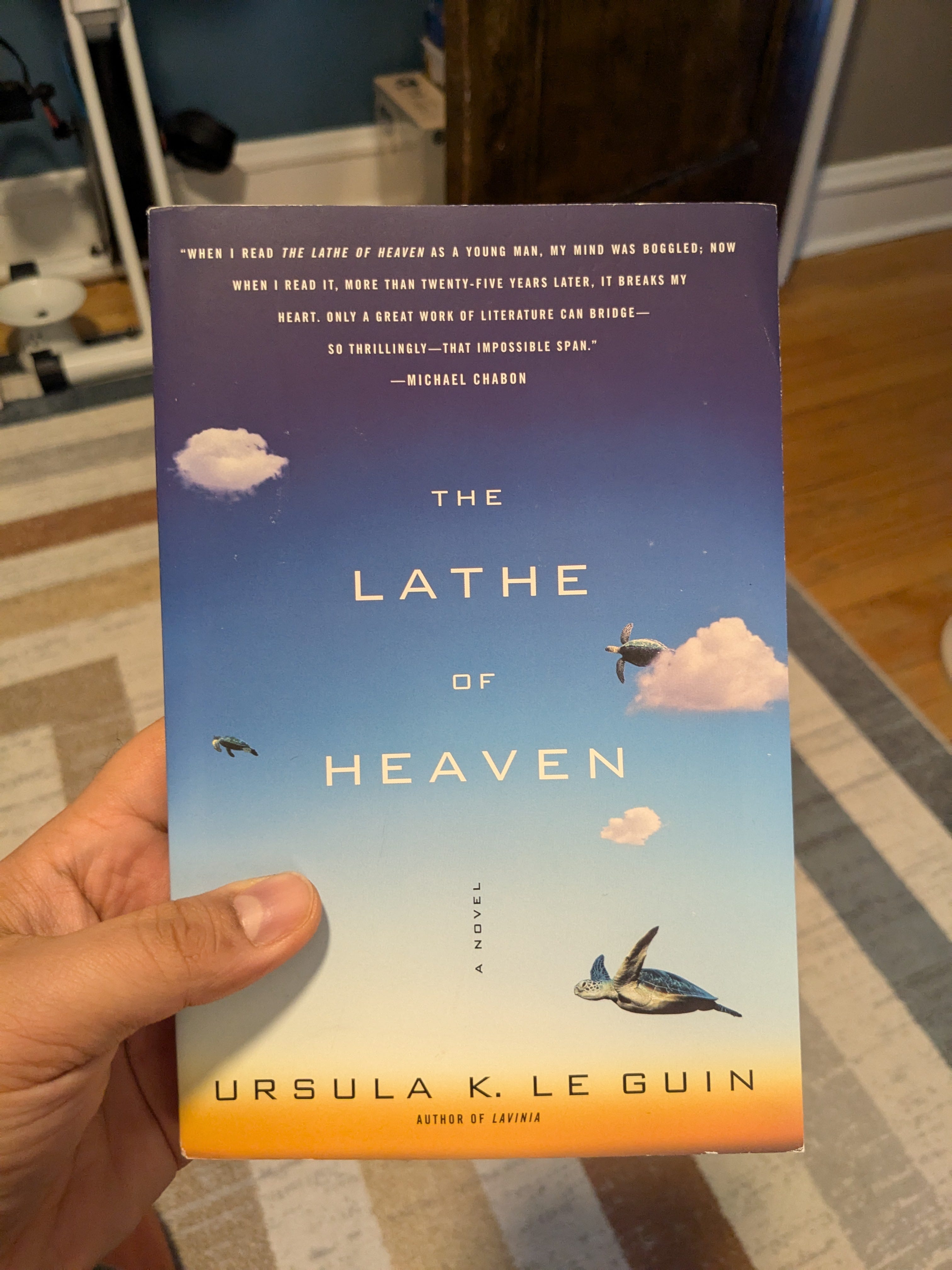
In a not-too-distant future, a man named George Orr wakes up to find that his dreams can alter reality. He seeks the help of Dr. Haber, an unscrupulous psychiatrist who sees an opportunity instead of a patient.
This was a re-read for me, and one that I was apprehensive about. There have been plenty of times when I’ve re-read a favorite and found it lacking the second time around. There are also times when I’ve outright hated a book on a second read.
I live in constant fear of this outcome.
Fortunately, I loved this more the second time around. I loved the dream aspect of this book, and I love how Le Guin was able to tell a full and complete story in under 200 pages. That is truly a lost art.
The Tainted Cup + A Drop of Corruption by Robert Jackson Bennett
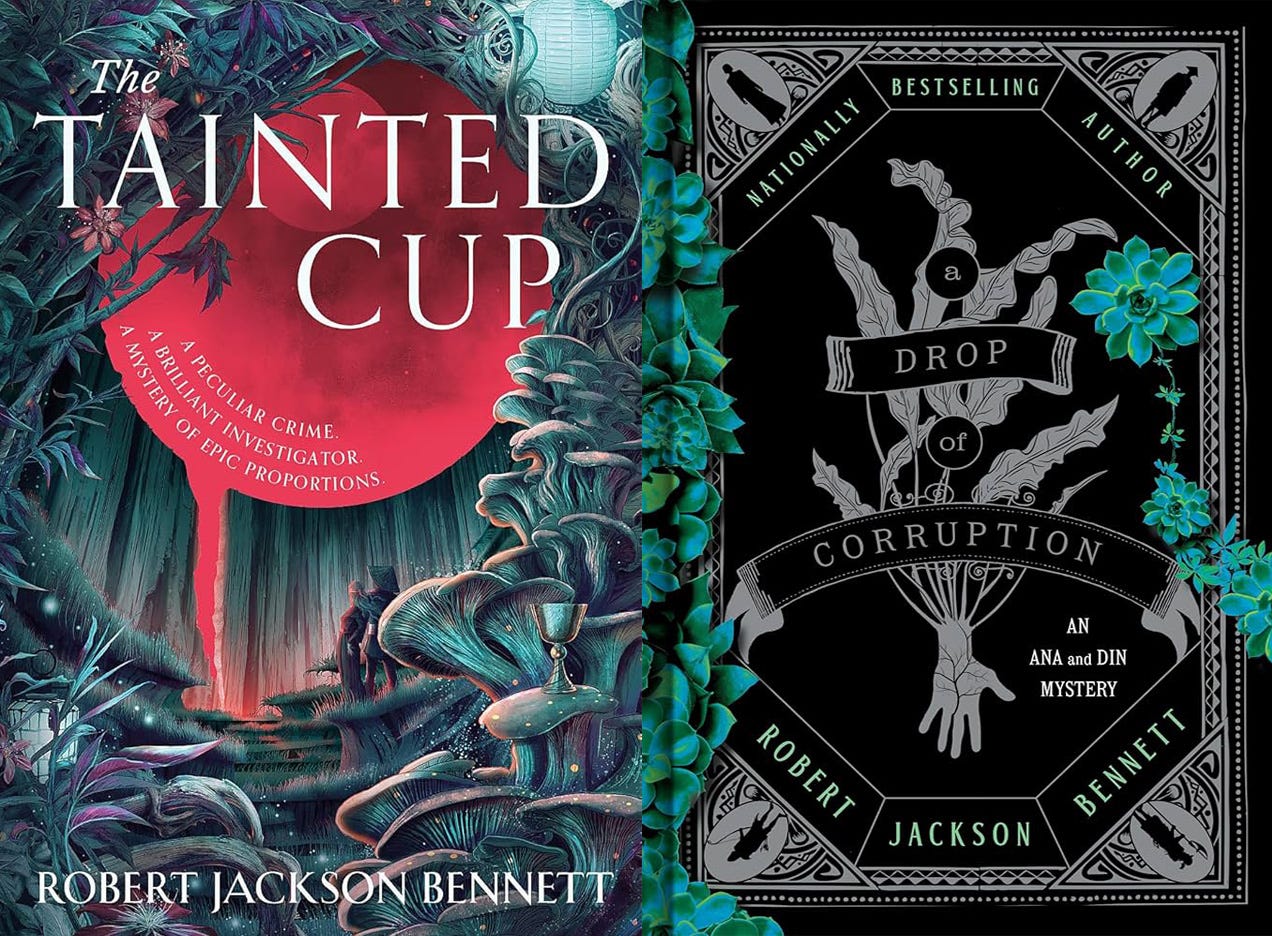
I’m including these books together because not only are they a part of the same series, but I read them pretty much back to back. I read The Tainted Cup for a book club and loved it so much I went right into A Drop of Corruption. These books concern a detective named Dinios Kol who is an assistant investigator to a genius eccentric named Ana Dolabra. They work to solve murders in a strange fantasy world that is a mix between a foggy and grimy London and the horrifying ecology of the Area X novels by Jeff Vandermeer.
These books were a delight to read. They were fun, adventurous, and were (most importantly) a great mystery. Ana and Din play off each other well, and the marketing description of a “Holmes-and-Watsonian” story aren’t too far off.
The Tainted Cup won the 2025 Hugo Award for Best Novel and the 2025 World Fantasy Award. While I don’t think it’s blow-your-socks-off good, I do think it’s well worth your time. You’ll read little else like it.
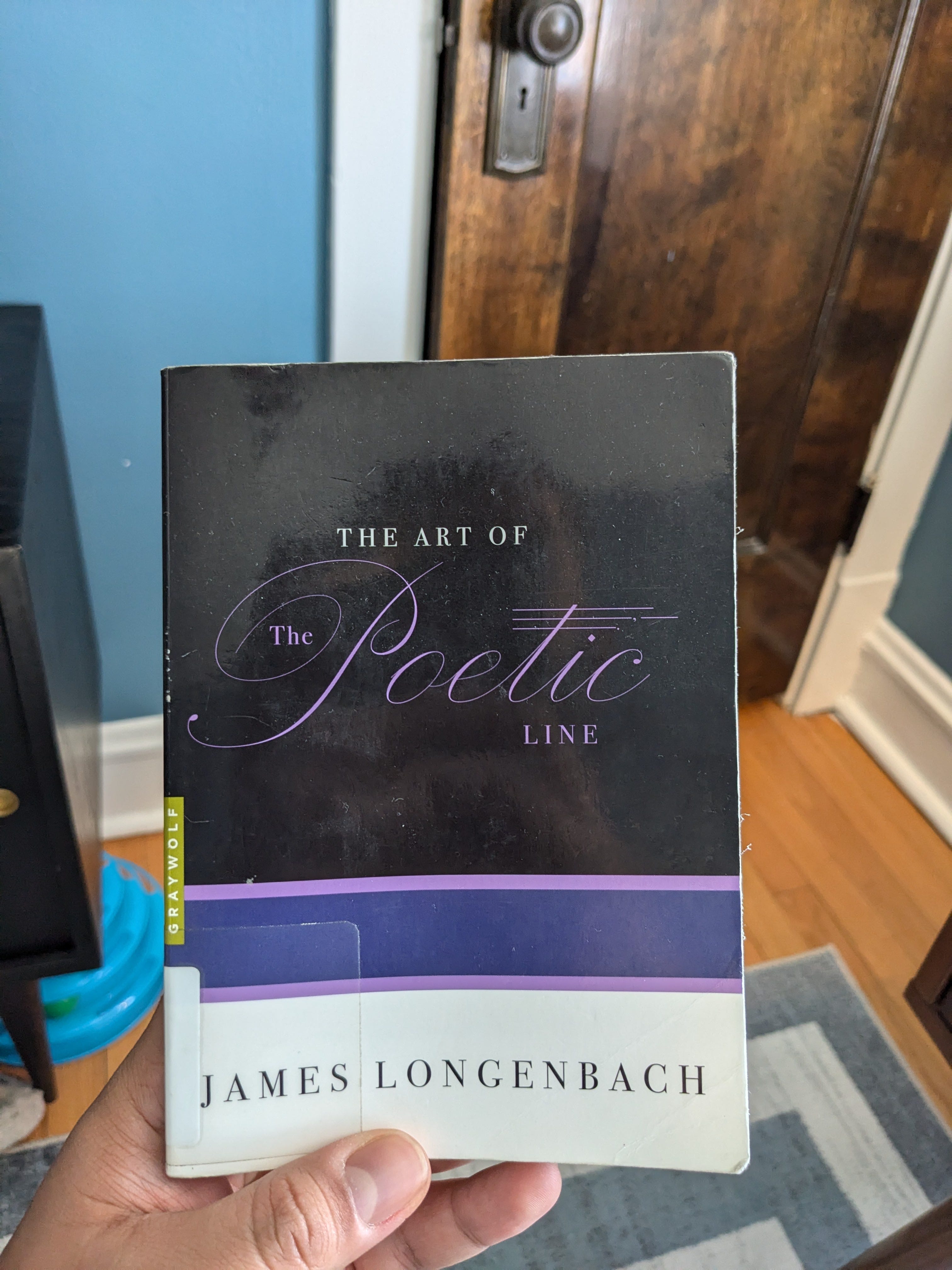
The Art of the Poetic Line by James Longenbach
I’ve been reading a lot more poetry lately, all in an effort to try and write some myself. I wrote (bad) poetry in high school and slightly less terrible (though still bad) poetry in college. I even performed some slam poetry in my twenties that I’m unironically proud of.
The Art of the Poetic Line is a non-fiction book on a specific aspect of poetry: the line. It doesn’t seem like something that warrants a entire book, but let me tell you: this text was a revelation. I always thought of poetry as not having any rules. You can write what you want, how you want it, and no one can say anything because it’s your art. While that may be true, it doesn’t necessarily mean that the art produced under these conditions will be any good. I’m not interested in merely producing art; I’m interested in making it good.
That’s why I love this book. I watched a YouTube video (can’t remember which one, sorry) that broke down a poetry collection using The Art of the Poetic Line as a guide. Finding out that not only are there rules to poetry, but there are also effective and ineffective ways to structure a poem has allowed me to now read poetry with a more critical eye. I now read poems twice in a row: the first time to become familiar with the contents, the second time to see what techniques are being used to convey the message. It’s surprisingly effective.
Gooseberries by Anton Chekhov
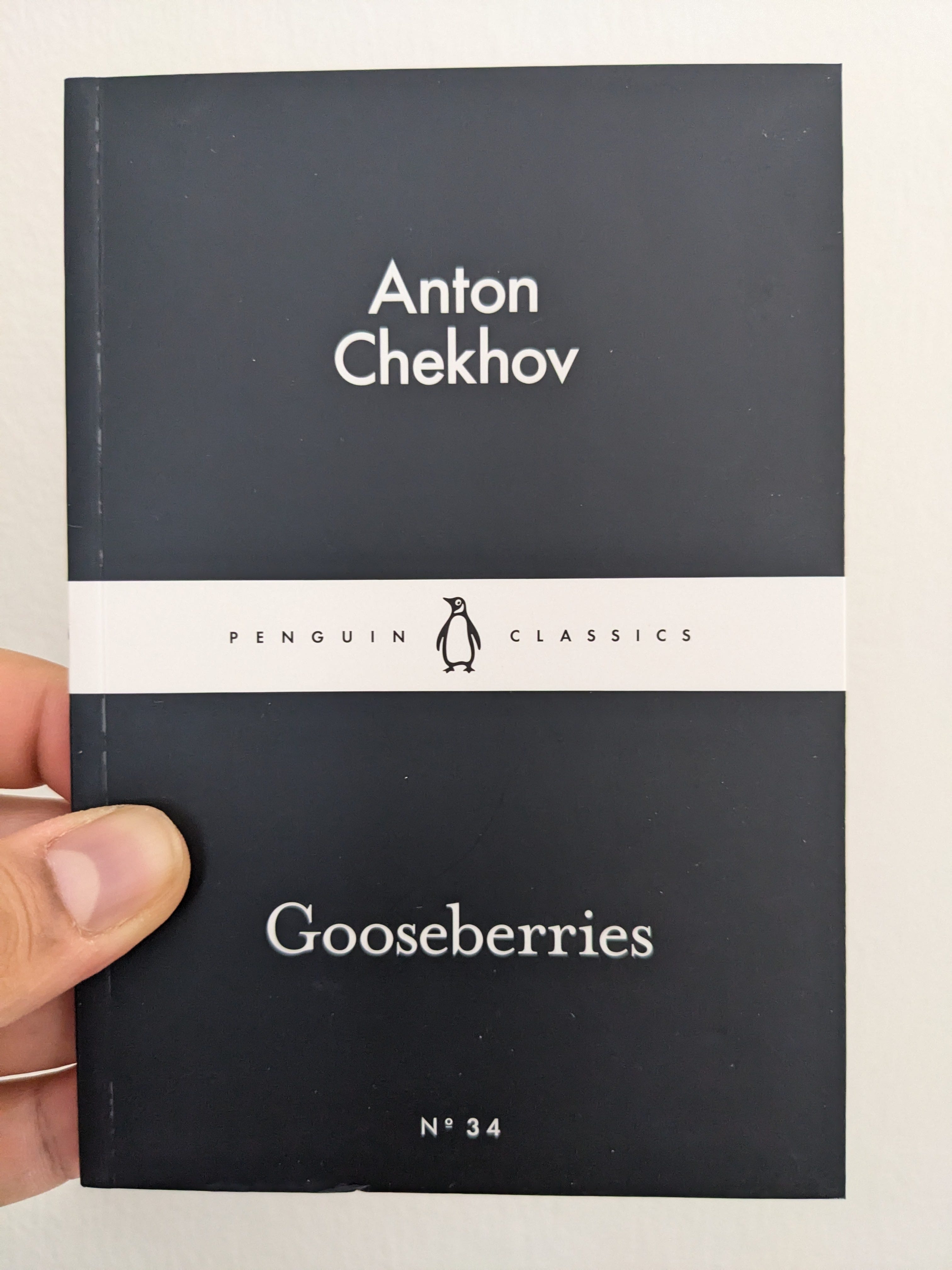
This mini-Penguin collection of three Chekhov short stories was a delight. I don’t read a lot of classical short fiction, and that is a shame. I’ve always been a particular fan of Chekhov’s short stories, however. There’s a universal insight into humanity and social anxieties that resonates across the centuries. There is also an economy to Chekhov’s prose that can feel refreshing, especially when the titans of Russian literature tend to write sprawling, epic tomes.
The Ringmaster’s Secret & The Scarlet Slipper Mystery by Carolyn Keene
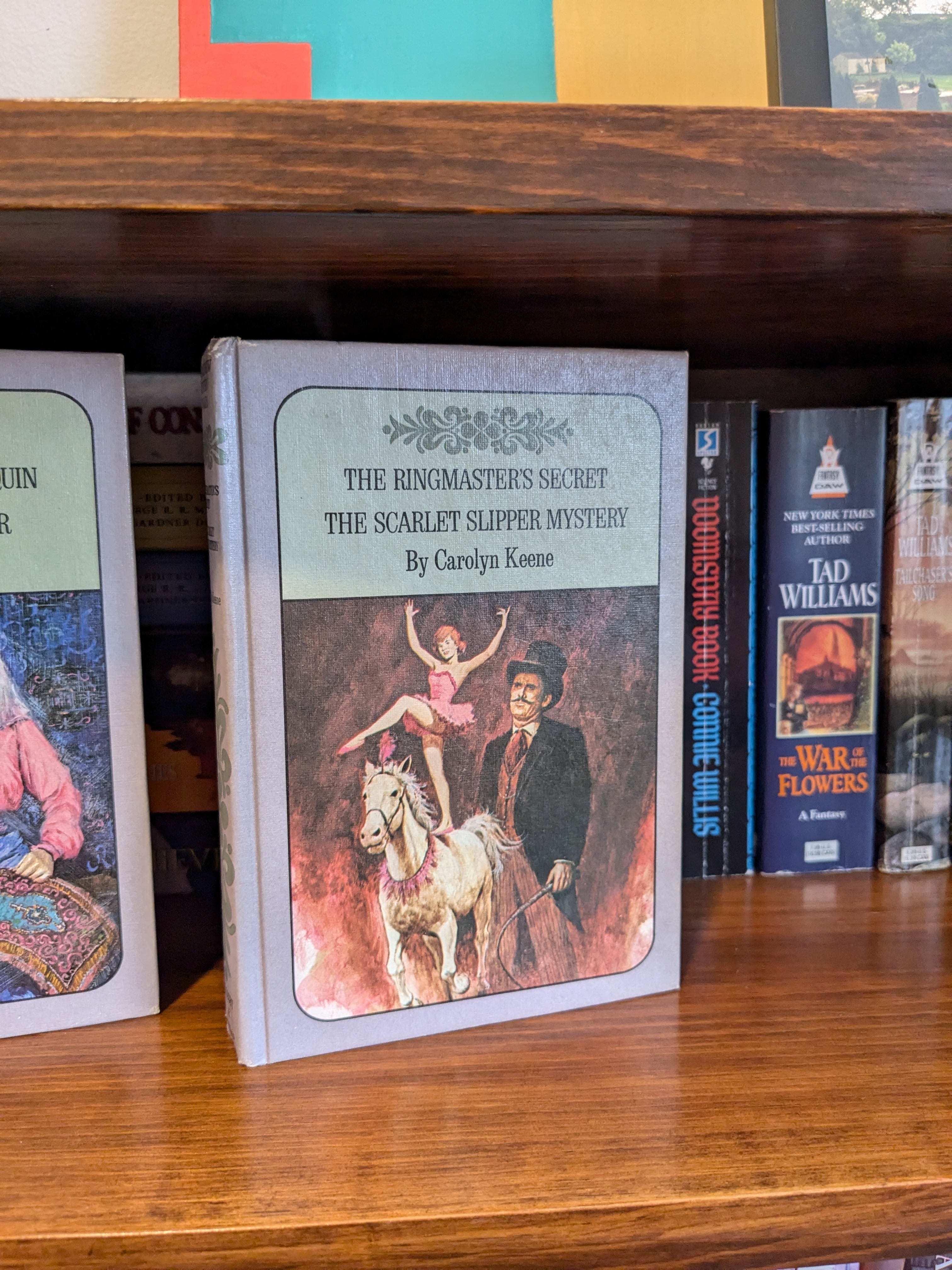
I know in this modern age, we aren’t meant to have guilty pleasures when it comes to literature. All reading is a pleasure. That’s why we do it.
But if I had to classify something as a guilty pleasure, it would definitely be Nancy Drew mysteries.
When I was a kid, my dad pulled me and my brothers into the vast world of Hardy Boys mysteries. I read as many as I could at a time, sometimes three or four over the course of a few days. When my library ran out of Hardy Boys, I dove straight into Nancy Drew. I was lucky to have a father who never told me that these books were meant for girls. I read through all the Nancy Drew books the library had.
This edition I have has two mysteries in one small hardcover. I got four of these at an antique store for $4 each and I think they’re great fun. Pocket-sized and easy to read in one sitting.
The mysteries themselves are charmingly out of date, simple, and predictable. The lines between private citizen and law enforcement might as well not exist with the way the police let this teenage girl investigate crimes and handle evidence. It’s a utopian world where the police and the public are actually working together, and Nancy Drew’s charm gains her the trust of strangers in only a few words.
Martyr! by Kaveh Akbar
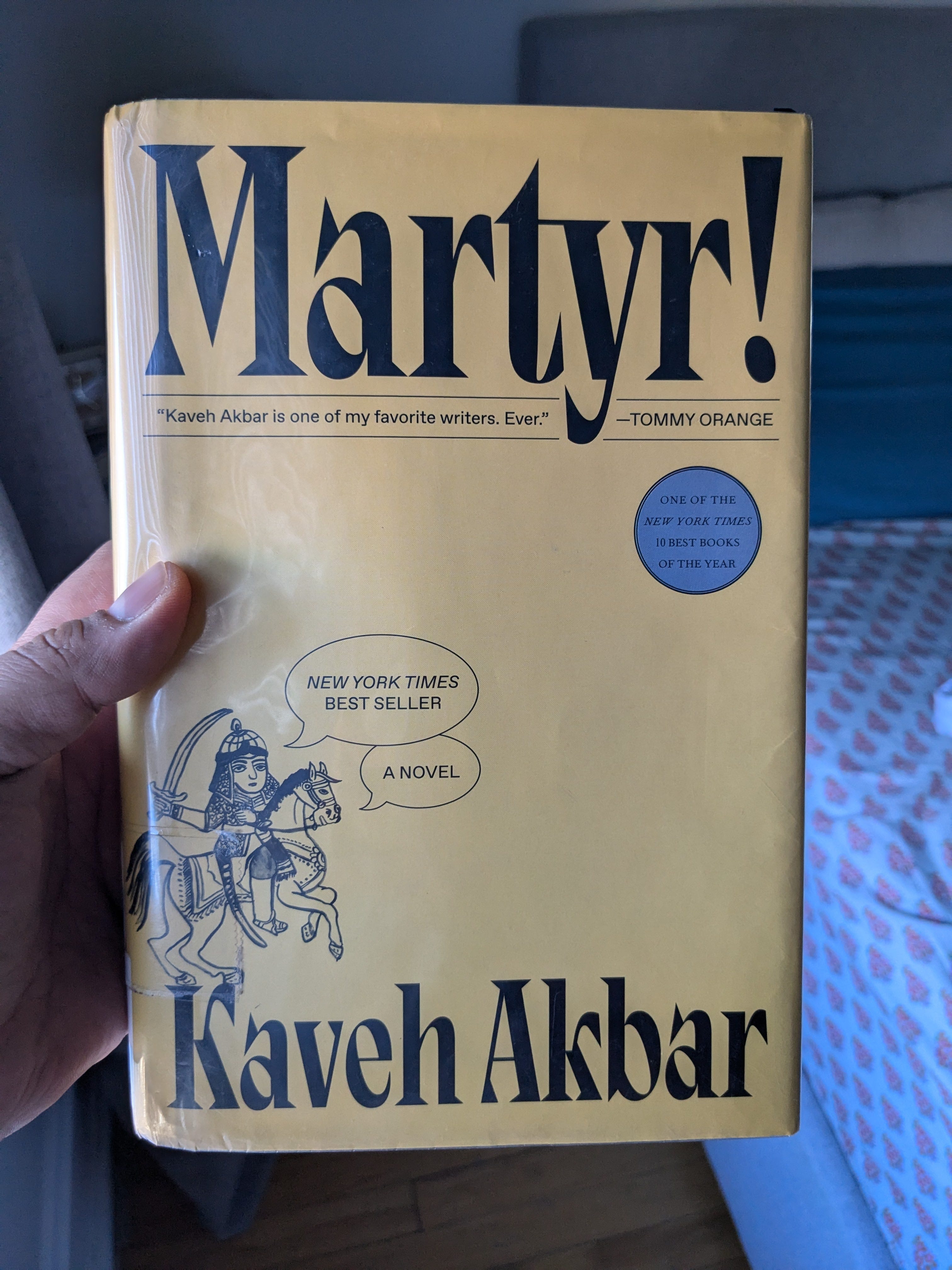
This book was recommended by a close friend. I don’t typically read literary fiction like this, but I trust my friend’s recommendations, and I’m always willing to read outside of my comfort zone.
This novel is about Cyrus, the orphaned son of Iranian parents. He’s an addict who is also an asshole, and he’s trying to write a book about martyrs.
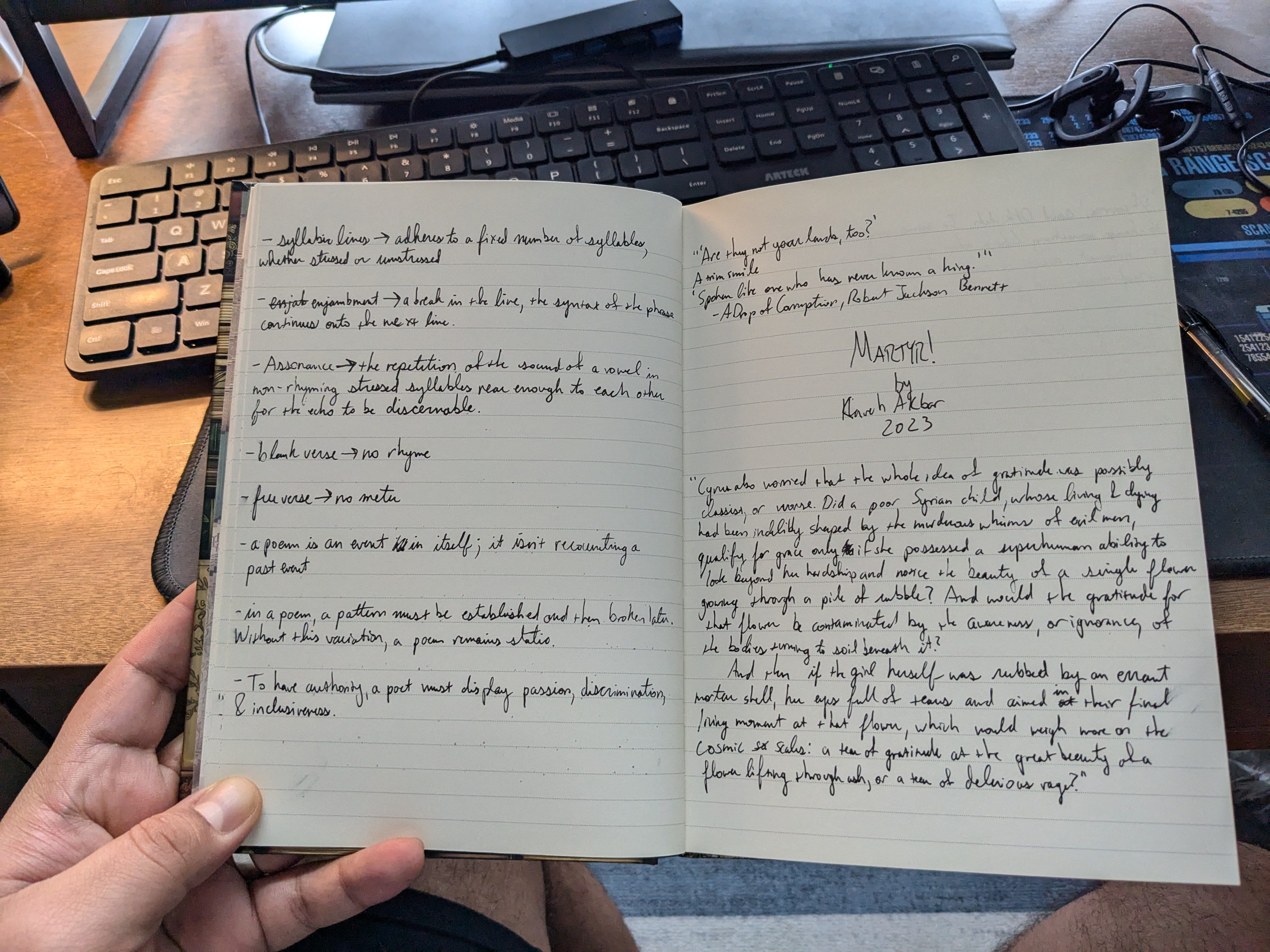
I used to love literary fiction like this in college. It was my jam. I tried to read Infinite Jest and almost succeeded. I don’t read much literary fiction anymore, but when I do, I’m often startled by the writing. I filled a few pages of a notebook with quotes from this book (couldn’t annotate it because it was a library book), and that is something I don’t do much of anymore.
Empire of Silence by Christopher Ruocchio
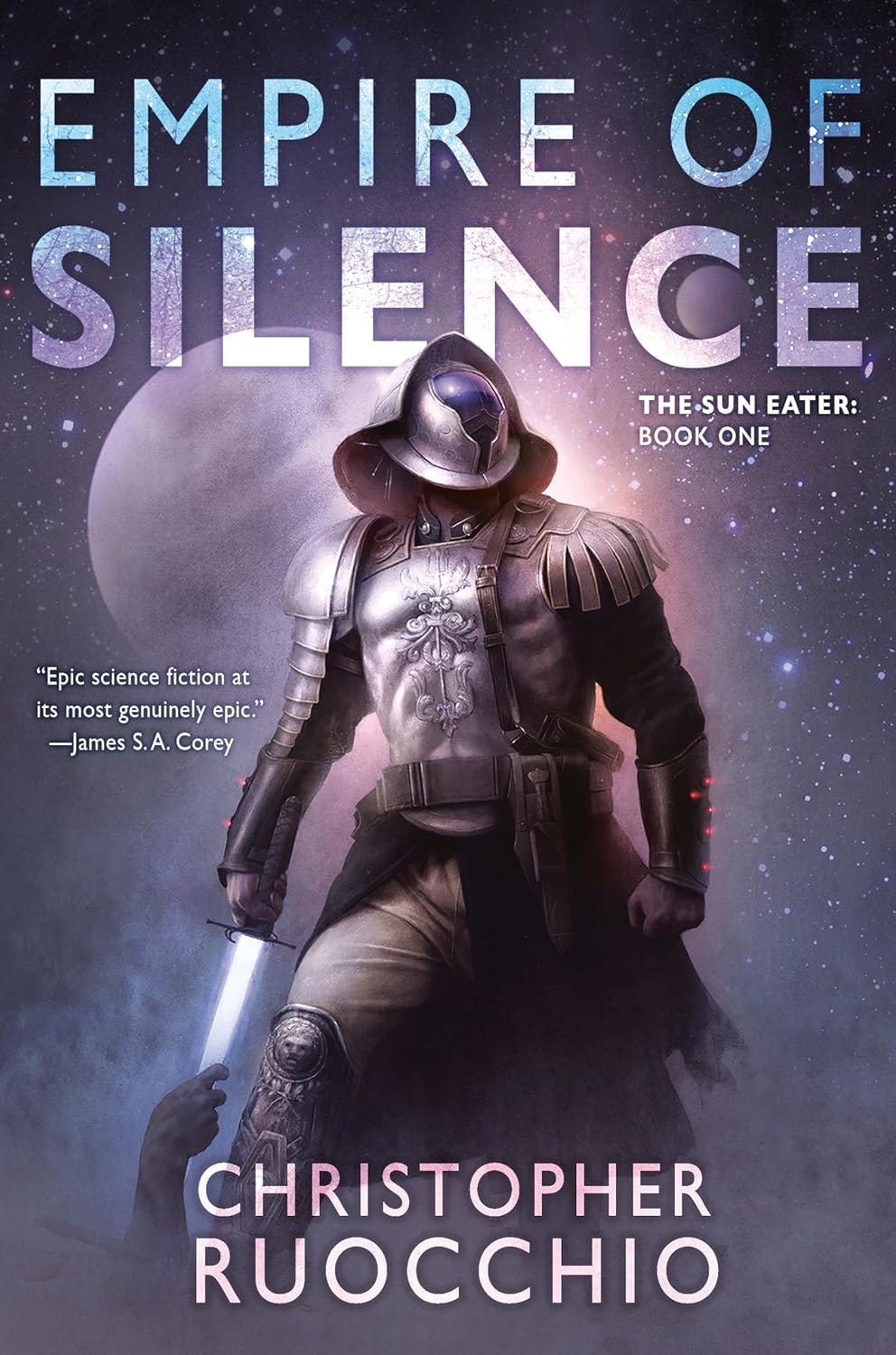
I know I’m late on the hype train with this one, but I don’t generally buy tickets to ride those rails. This series has been on my radar since this first book came out, and that was mostly due to the cover art. I mean, look at the space suit. That sword. The desperate hand gripping the shimmering blade.
This space opera follows Hadrian Marlowe, the son of a nobleman who through chance and choice ends up far away from home and having to start basically from zero. This series is well-known for its opening, where you’re told the end of the story: Hadrian Marlowe blows up a star at the end. This isn’t a spoiler. You are then left to follow this man’s journey through his life.
Of the first-person science fiction and fantasy series that I’m currently reading (The Red Rising series by Pierce Brown and the Hierarchy series by James Islington), this one is my favorite so far. Granted it’s only been one book, and I’m much further along in the Red Rising series than I am in Suneater, but I’ve got a feeling. Let’s see if Mr. Ruocchio can keep the momentum up for 6 more books.
The Library at Mount Char by Scott Hawkins
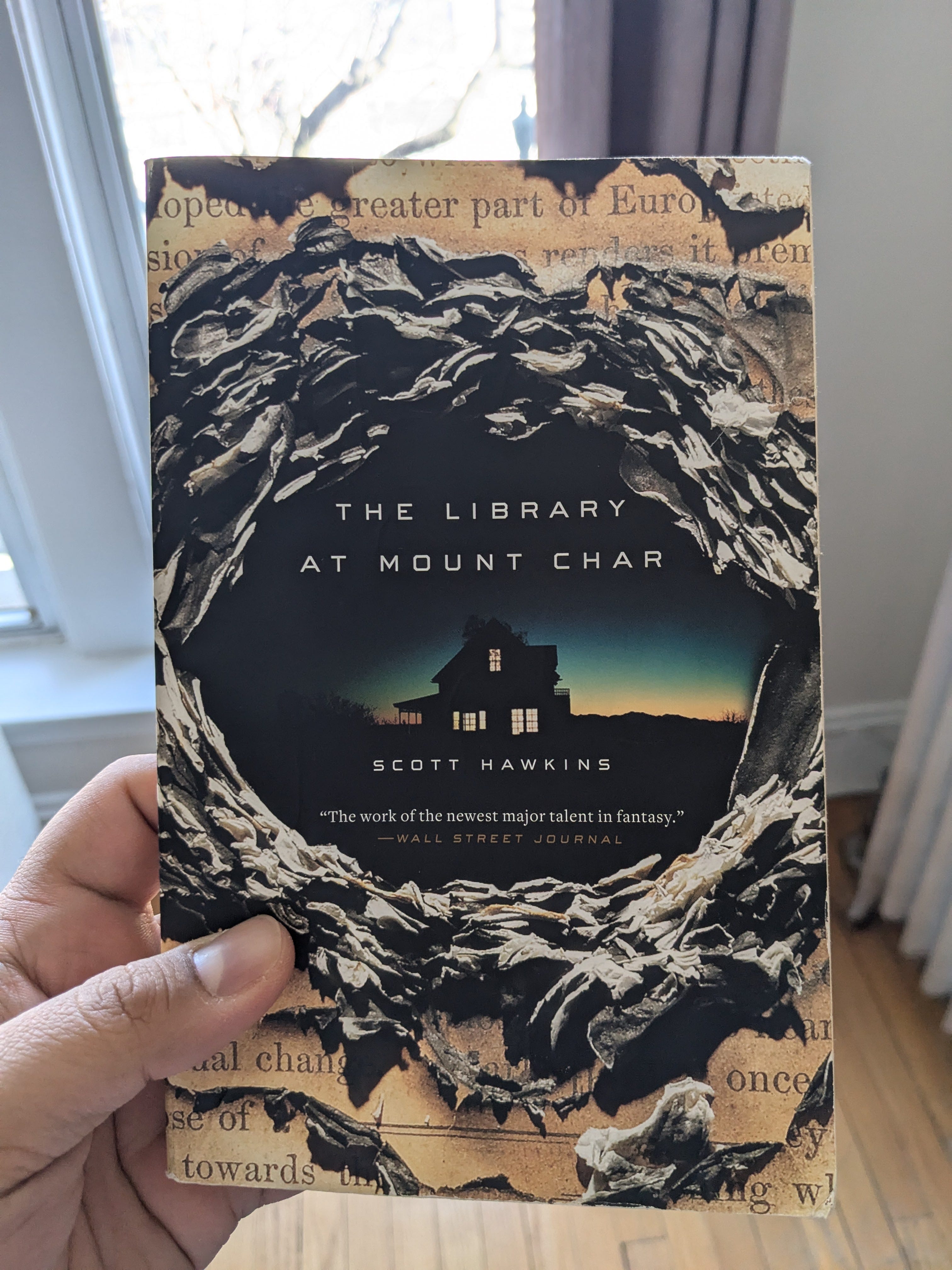
This is a weird one.
The Library at Mount Char is a bizarro gorefest of a novel that creates its own mythology and doesn’t stick around long enough to get too deep into it. A lot of the lore and worldbuilding is done in the gaps, with you having to fill in a lot of it on your own. That doesn’t make the book confusing, but it does make it weird.
Carolyn isn’t an ordinary woman. This novel opens with her walking down the street covered in blood. She studies in an infinite library with other strange people, one of whom is more comfortable speaking to animals and another who’s extremely homicidal. Steve is just a regular guy who gets hired by Carolyn for an obscene amount of money. This starts a bizarre adventure with tigers and Gods and ancient councils and reanimation, and a whole lot more.
This is a truly unique novel, and it’s hard to classify. I’d say it’s a dark urban fantasy. It’s gory. Cartoonishly-so. It’s a story of power and cunning. It’s a story about connecting with a world you don’t understand.
I enjoyed this book, but if I’m being honest, the excessive violence threw me off. I guess I wanted a little bit more of the fantastical. We spend a lot of time in the “real world,” and I wanted more juicy worldbuilding details.
Iron Gold by Pierce Brown
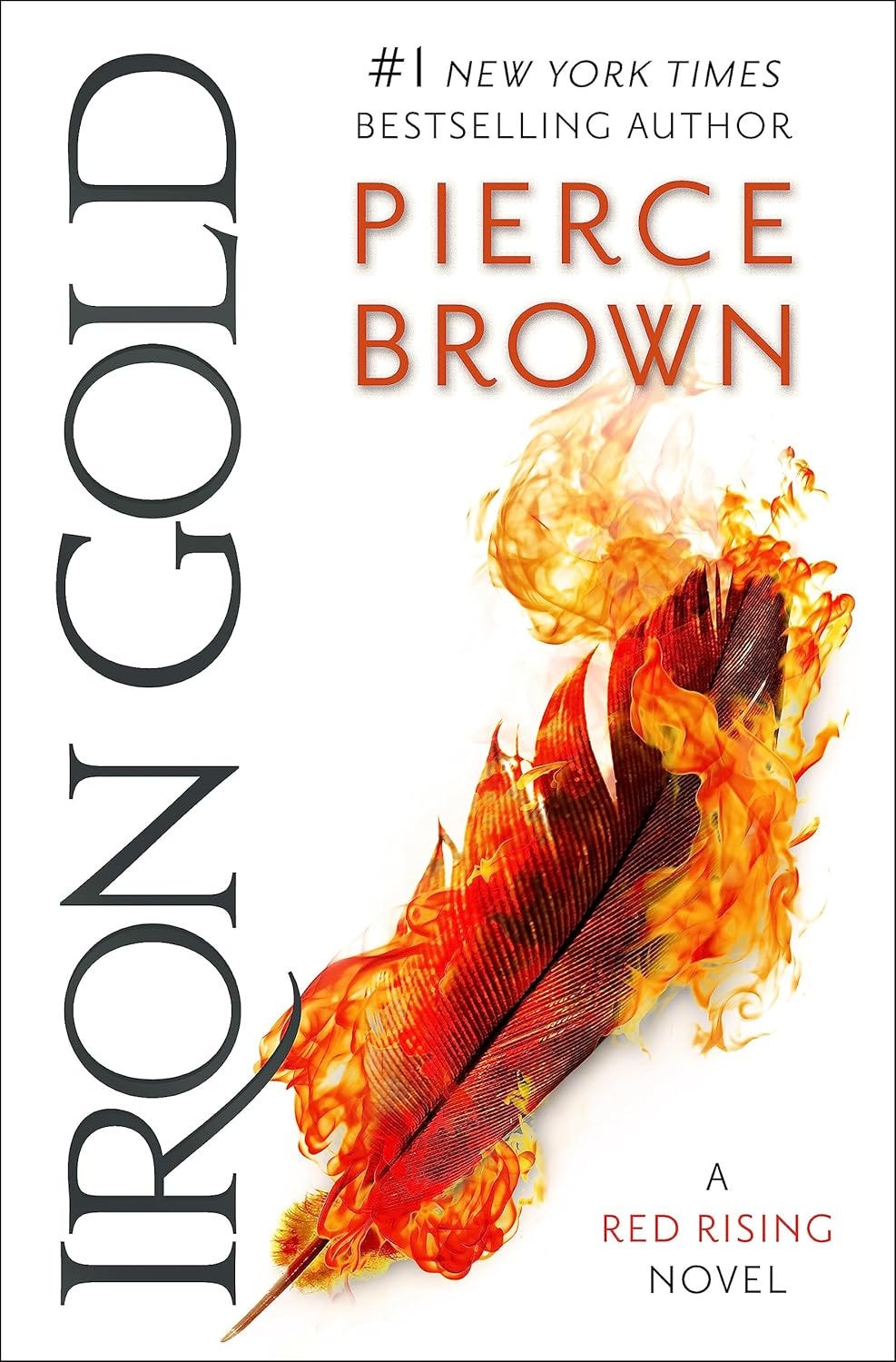
This is the fourth book in the Red Rising series, though it takes place ten years after the events of the third book. I won’t say anything about the plot, since that would spoil EVERYTHING. Instead, I’ll just say this: the series gets better and better with every book.
That was the last book I finished in March.
Currently Reading
 The Night Bulletin